

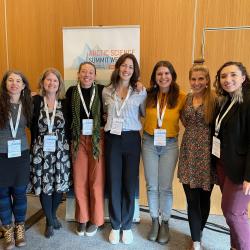
ELOKA at the Arctic Observing Summit in Scotland
ELOKA team members attended the Arctic Observing Summit (AOS), a biannual meeting focused on Arctic observing, at the end of March in Edinburgh, Scotland. ELOKA team members helped organize two sessions on Indigenous Data Sovereignty as part of the Data Sharing working group.
Read More
ELOKA team members attended the Arctic Observing Summit (AOS), a biannual meeting focused on Arctic observing, at the end of March in Edinburgh, Scotland. ELOKA team members helped organize two sessions on Indigenous Data Sovereignty as part of the Data Sharing working group.
Read More
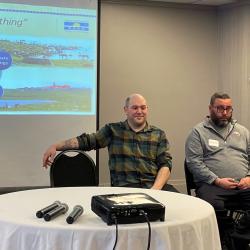
ELOKA co-hosts Indigenous Data Guardians Data Roundtable in Northwest Territories, Canada
ELOKA members attended a meeting in January 2024 in Yellowknife, Northwest Territories, Canada, where Indigenous guardians met to discuss data collection, usage, management, and ultimately data sovereignty.
Read More
ELOKA members attended a meeting in January 2024 in Yellowknife, Northwest Territories, Canada, where Indigenous guardians met to discuss data collection, usage, management, and ultimately data sovereignty.
Read More
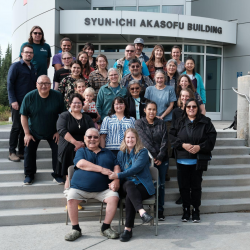
ELOKA partners meeting in Fairbanks, Alaska, August 21 to 24, 2023
In August 2023, ELOKA partners gathered at the University of Alaska, Fairbanks (UAF), and spent four days strengthening connections and setting goals and priorities for ELOKA. Partners traveled from different regions in Alaska, British Columbia and Labrador, Canada, and Finland.
Read More
In August 2023, ELOKA partners gathered at the University of Alaska, Fairbanks (UAF), and spent four days strengthening connections and setting goals and priorities for ELOKA. Partners traveled from different regions in Alaska, British Columbia and Labrador, Canada, and Finland.
Read More
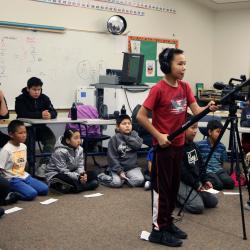
Sitting at the feet of Chevak Elders: Video stories for the Nunaput Atlas
In November 2022, videography experts from the organization See Stories taught videomaking skills to a classroom of Chevak sixth graders in Alaska. Fifteen short videos will eventually make it the online Nunaput Atlas, which ELOKA helped create.
Read More
In November 2022, videography experts from the organization See Stories taught videomaking skills to a classroom of Chevak sixth graders in Alaska. Fifteen short videos will eventually make it the online Nunaput Atlas, which ELOKA helped create.
Read More
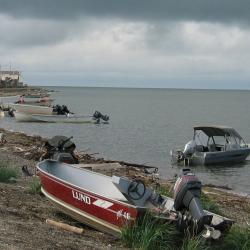
Weaving a web of knowledge: Supporting observers of the Arctic
Working with Indigenous communities takes time, resources, and patience, but a shift is needed in science to include community voices and observations to widen and deepen our collective breadth of knowledge. The Exchange for Local Observations and Knowledge of the Arctic (ELOKA), a NSIDC program, continues to collaborate with the Alaska Arctic Observatory and Knowledge Hub (AAOKH) to support an…
Read More
Working with Indigenous communities takes time, resources, and patience, but a shift is needed in science to include community voices and observations to widen and deepen our collective breadth of knowledge. The Exchange for Local Observations and Knowledge of the Arctic (ELOKA), a NSIDC program, continues to collaborate with the Alaska Arctic Observatory and Knowledge Hub (AAOKH) to support an…
Read More
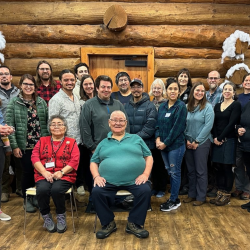
ELOKA partner meeting
On December 6 and 7, 2022, ELOKA met with partners at the Alaska Native Heritage Center in Anchorage, Alaska, to make plans for partner involvement in ELOKA’s work through the end of the current National Science Foundation (NSF) award in early 2026.
Read More
On December 6 and 7, 2022, ELOKA met with partners at the Alaska Native Heritage Center in Anchorage, Alaska, to make plans for partner involvement in ELOKA’s work through the end of the current National Science Foundation (NSF) award in early 2026.
Read More
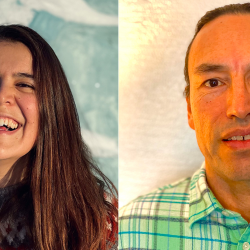
ELOKA team is growing
The ELOKA team is growing! In the fall of 2022, we added two new positions to our team: an outreach and network manager and postdoctoral researcher.
Read More
The ELOKA team is growing! In the fall of 2022, we added two new positions to our team: an outreach and network manager and postdoctoral researcher.
Read More
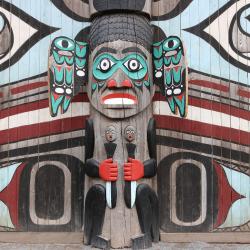
White House guidance on Indigenous Knowledge recognizes ELOKA
On November 30, 2022, the White House released a guidance document that identifies ELOKA as an example of a successful data management program that serves both Indigenous communities and federal agencies.
Read More
On November 30, 2022, the White House released a guidance document that identifies ELOKA as an example of a successful data management program that serves both Indigenous communities and federal agencies.
Read More

ELOKA opens doors: A profile of an intern
In the summer of 2022, ELOKA chose Benjamin Brown to be ELOKA's intern and assist with developing a new module for an existing Atlas.
Read More
In the summer of 2022, ELOKA chose Benjamin Brown to be ELOKA's intern and assist with developing a new module for an existing Atlas.
Read More
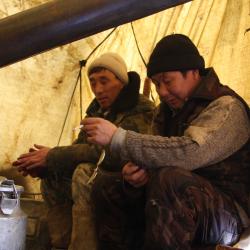
Visual histories added to Evenki Atlas
In the summer of 2022, a sixth module with videos, the Evenki Visual Histories, was added to the existing Evenki Atlas—the first online cultural atlas of Indigenous Knowledge from Siberia, Russia.
Read More
In the summer of 2022, a sixth module with videos, the Evenki Visual Histories, was added to the existing Evenki Atlas—the first online cultural atlas of Indigenous Knowledge from Siberia, Russia.
Read More